Saturday, January 4, 2014

DASH Diet....


What DASH Can Do for You

The DASH Diet can help lower your blood pressure and cholesterol levels, which is good for your heart. In fact, DASH stands for Dietary Approaches to Stop Hypertension, or high blood pressure. Even if you don’t have high blood pressure, the DASH Diet is worth a look. It may help you lose weight because it’s a healthier way of eating. You won’t feel deprived. You’ll have lots of vegetables, fruits, and low-fat dairy products while cutting back on fats, cholesterol, and sweets.

Cut the Salt

Too much salt causes fluids to build up in your body. This puts extra pressure on your heart. On DASH, you’ll lower your sodium to either 2,300 or 1,500 milligrams a day, depending on your health, age, race, and any medical conditions. Here are some ways to cut back:

·     Choose low- or no-sodium foods and condiments.

·     Watch foods that are cured, smoked, or pickled.

·     Limit processed foods. They're often high in sodium.

 
Get Your Grains

Eating whole grains like whole wheat breads, brown rice, whole grain cereals, oatmeal, whole wheat pasta, and unsalted pretzels or popcorn is a good way to get fiber. Fiber helps lower your cholesterol and also keeps you feeling full longer. For a diet of 2,000 calories per day: Eat six to eight servings a day. One serving is a slice of bread, 1 ounce of dry cereal, or ½ cup of cooked whole wheat pasta, rice, or oatmeal (about the size of half a baseball). 

Load Your Plate With Vegetables

Vegetables give you fiber, vitamins, and minerals. They don't have a lot of calories or fat -- a good recipe for controlling blood pressure. Have four to five servings of vegetables a day. That’s 1/2 cup of cooked or raw vegetables, 1 cup of raw leafy vegetables, or 1/2 cup of vegetable juice for each serving. Iffy about veggies? Start by adding a salad at lunch and dinner.

Don't Forget Fruit

Fruits offer lots of fiber and vitamins that are good for your heart. Many also have potassium and magnesium, which lower blood pressure. Have four to five servings of fruit every day. One serving is a medium apple or orange, or 1/2 cup of frozen, fresh, or canned fruit. One-half cup of fruit juice or 1/4 cup of dried fruit also counts as a serving. Try adding bananas or berries to your breakfast cereal or have fruit for dessert.

Have Some Yogurt

Low- and no-fat dairy foods are good sources of calcium and protein, which can help maintain a healthy blood pressure. Try to get two to three servings of dairy every day. Choose skim or 1% milk, buttermilk, and low- or no-fat cheeses and yogurt. Frozen low-fat yogurt is OK, too. One serving equals 1 cup of yogurt or milk, or 1 1/2 ounces of cheese -- about the size of three dice.

Go for Lean Meats and Fish

You can still eat meat. Just make sure it’s lean. Meats are good sources of protein and magnesium. Skinless chicken and fish are also on the menu. Limit your servings to six or fewer a day. A serving is 1 ounce of cooked meat, fish, or poultry, or one egg. A good rule is to have no more than 3 ounces of meat at a meal -- the size of an iPhone. Limit egg yolks to no more than four in a week.

Add Nuts and Legumes

Nuts, legumes, and seeds are rich in magnesium, protein, and fiber. Walnuts are full of omega-3 fatty acids, which may help lower your risk of heart disease. Enjoy as many as five servings of these foods each week. That’s 1/3 cup of nuts, 2 tablespoons of seeds, or a 1/2 cup of cooked dried beans or peas in each serving. Grab a handful of seeds or nuts as a snack. Or add beans to your salads or soups.

Cut Back on Fats and Oils

Eating too many fats can cause high cholesterol and heart disease. With DASH, you’ll limit fats and oils to two to three servings a day. A serving is 1 teaspoon of margarine or vegetable oil, 1 tablespoon of mayonnaise, or 2 tablespoons of low-fat salad dressing. When cooking, use vegetable oils like olive or canola instead of butter.

Watch the Sweets

You don't have to skip all sweets. But you should try to have five or fewer servings a week. That’s 1 tablespoon of sugar or jam, 1 cup of lemonade, or 1/2 cup of sorbet at a time. Choose sweets that are low in fat, such as gelatin, hard candy, or maple syrup. Instead of high-fat desserts, try having fresh fruit over low-fat ice cream.

Get Enough Potassium

Potassium is another important part of the DASH diet. Getting enough of this mineral may help lower your blood pressure. It's best to get potassium from food instead of supplements. Aim for 4,700 milligrams (mg) a day. Try these potassium-rich foods:

·     Potato: 926 mg

·     Sweet potato: 540 mg

·     Banana: 420 mg

·     Avocado (1/2): 345 mg

Cooked spinach (1/2 cup): 290 mg


Sunday, November 10, 2013


Lord Brahma at Thirumukkoodal


At the confluence of three rivers near Kanchipuram, Tamil Nadu lies the village of Thirumukkoodal. An ancient Chola temple resides there, at the sangam of the rivers Palar, Seyar, and Vegavathi. Because all three rivers are visible at the confluence, this place is considered to be more sacred than Triveni Sangam, in which the Saraswati River is underground and cannot be seen.

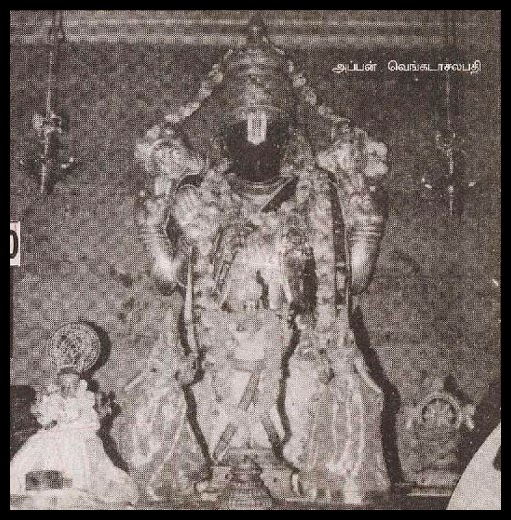
The temple at Thirumukkoodal (Thirumukkudal) is known as the Appan Venkatesa Perumal Temple, or Sri Venkatesa Perumal Temple. The presiding deity here is the Trimurti, embodied in a single form as Appan (Brahma), Shiva, and Venkatesa Perumal (Narayana). While Appan Venkatesa Perumal is understood to be the original deity here, temple epigraphs reveal that the deity was called Vishnu Bhatara in Pallava times, Tirumukkudal-Azhwar and Mahavishnu in the Chola period, and Venkateswara Swami at a later date.
 

The presiding deity is quite unusual, being an amalgamation of the Trimurti divinity. The deity's crown gives the appearance of Lord Shiva's matted locks of hair, and He has a third eye on the forehead. Like Narayana, He holds the conch and chakra, as well as a lotus, and He stands on a lotus pedestal. Lord Brahma is said to be embodied in the lotus emblems, Shiva in the hair, and Narayana in the conch and chakra.

Across the River Palar sits another famous temple, the Pazhaya Seevaram Narasimha Swamy Temple, and these two temples are often mentioned together, due to an annual pastime engaged in by the presiding deities from each. The Pazhaya Seevaram temple is just before the town of Wallajabad. Because of their close proximity, the location of the Thirumukkoodal Appan Venkatesa Perumal Temple is sometimes given as Pazhayaseevaram, although that more properly refers to Lord Nrsimhadeva's site across the river.

Sri Venkatesa Perumal Temple has existed since at least the 9th century, and inscriptions show that it existed under the rule of the Pallava monarch, Nripatungavarman. It is now maintained by the Archeological Survey of India (ASI) as a protected site. According to the epigraphs in this shrine, Tirumukkudal was situated in the ancient territorial sub-division called Madhurantaka-Chaturvedimangalam, which was a part of Kalatur-kottam, a district of Jayamkonda-chola-mandalam.

The legends associated with the temple endow it with great historical significance. They describe the story of Raja Tondaiman Chakravarti, a devoted follower of Venkatesa Perumal. The Lord offered the king his conch and chakra, to save his empire from foreign invasion. Later the king erected this temple to glorify the Lord.


Temple Architecture and Grounds:


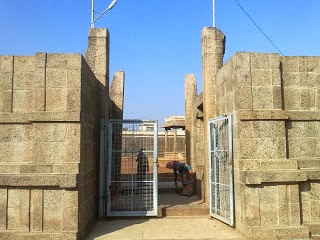
This Pallava style temple is quite large, and is constructed in an unusual style. Devotees enter through a side entrance near the perimeter of the temple compound. A mandapa with large pillars leads the way to the sanctum sanctorum, which faces north. The pillars have exquisite bas-relief sculptures. Various inscriptions speak of endowments and gifts made to the temple during the Chola reign.

In the sanctum, Sri Appan Venkatesa Perumal is found in a standing position with His consorts Boomadevi (Bhudevi) and Sridevi meditating at His feet, and the sage Markandeya (Karumanickar) beside Him on one wide, with Sudarshan chakra on the other.

To the right of the presiding deities is a small shrine for the Goddess Alamelumanga, which faces east. 'Alamelumanga' is Tamil for Padmavati, a representation of Laksmi Devi. Other murtis located nearby include Garuda, Hanuman, and others. There are also stone murtis of many of the Azhwars.
 

A spacious courtyard houses several mantapams, the pillars ornately carved with bas-relief sculptures done in Vijayanagara style, depicting various incarnations of the Lord, Mahalakshmi, Rama, Garuda, Hanuman and Ramanuja. The temple grounds have a large tree along the river bank, although above the confluence, the rivers are sometimes dry. Regardless, because of the temple's close proximity to the river sangam, it was designed with an expectation of periodic flooding. In the mandapam behind the main sannidhi a drainage system was constructed, so water could flow around the temple, rather than through it.


Temple Inscriptions:


Aside from the rare nature of the presiding deity here, one of the aspects of Sri Appan Venkatesa Perumal Temple that is of greatest historical significance is the presence of proliferate inscriptions, all around the temple environs. The walls of the main sanctum as well as those of the second prakara are covered in epigraphs, in ancient Tamil script. The oldest can be dated to the reign of Pallava ruler Nripatungavarman, in the 9th century A.D. There are also many Chola inscriptions dated to the reign of Rajaraja I, who built the Brihadeshvara Temple at Tanjore

Other inscriptions mention Rajendra-I, Vira-Rajendra and Kulottunga-I, referring to endowments and gifts made to Thirumukkoodal temple, which clearly enjoyed great popularity during the Chola reign.

Among the many fascinating inscriptions found here, aside from those documenting the presence of the presiding deity, are epigraphs engraved on the east wall of the first prakara. They belong to the period of Vira-Rajendra Chola, 1062-1070 A.D. This long epigraphical record, which winds along the temple walls, documents the existence of an important Vedic college located inside the temple's Jananatha-mantapa, during the 11th century A.D. Eight subjects were taught, including the Rig Veda, Yajur Veda and grammar. The number of students enrolled, the number of teachers for each subject, and the daily stipends paid to them are all detailed in the inscriptions.
 

The epigraphs also document that an Ayurvedic hospital (athura-salai) was attached to the temple, and students and temple staff were treated there. This hospital, called Vira-Cholan, had 15 beds and a large staff of physicians, including a surgeon named Kodandaraman Ashvathaman-Bhattan, who performed operations in the hospital. Many nurses attended the patients, and servants fetched medicinal herbs. The names of some 20 Ayurvedic medicines stored in the hospital are also documented in the inscriptions. This full-fledged hospital at Thirumukkoodal, while essentially Ayurvedic, falls into the category of the Siddha system of medicine adopted by the Tamils.


Thanks to these ancient epigraphs, Thirumukkoodal Temple is considered a monument of national importance, these being the longest Chola inscriptions on record. More than a thousand years old, they represent some of the earliest known definitions for "doctor" and "nurse" on record.